
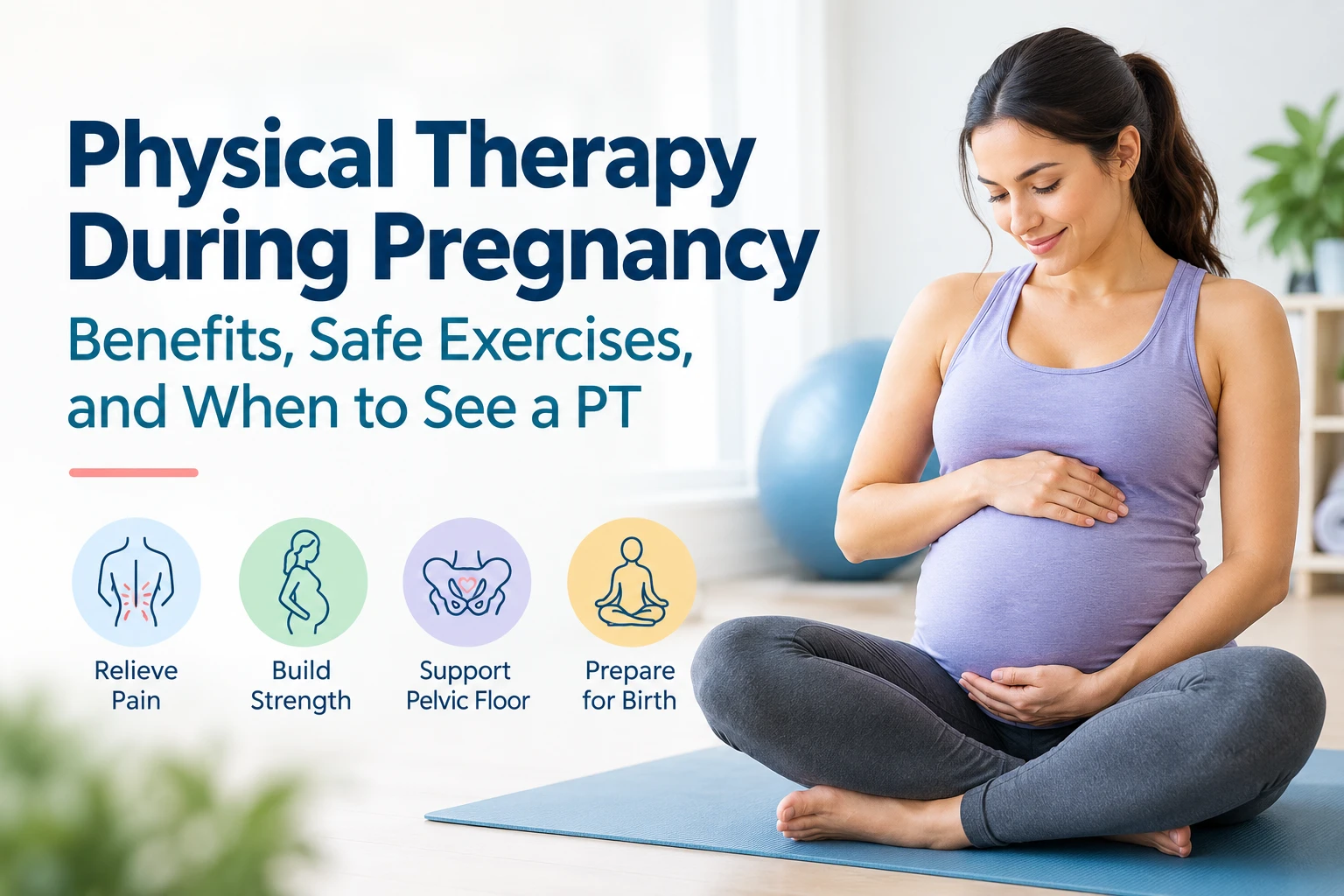
Pregnancy changes your body faster than almost any other time in life. Your center of gravity shifts, ligaments soften, the abdominal wall stretches, and your pelvic floor supports a growing baby for months. It’s no surprise that aches, pressure, and leaking are so common. What’s less well known is that you don’t have to simply grin and bear them.
Physical therapy during pregnancy, often called prenatal physical therapy, is hands-on, individualized care that can help with back and hip pain, pelvic pressure, and breathing and posture changes. It can also prepare your body for labor and make postpartum recovery smoother. This guide explains what physical therapy for pregnant women involves, who benefits, which exercises are generally considered safe, the warning signs that mean stop, and how to find the right therapist.
Key takeaways
- Prenatal physical therapy treats pregnancy-related pain and prepares the core and pelvic floor for birth.
- You don’t need to wait for pain. Many people book in the second trimester or earlier.
- Your pelvic floor needs to learn both to contract and to relax, and birth relies on the second skill.
- Most healthy pregnancies allow regular moderate exercise, but always check with your obstetric provider first.
- Electrical stimulation devices are not appropriate during pregnancy.
What Is Physical Therapy for Pregnant Women?
Prenatal physical therapy is delivered by a licensed physical therapist, ideally one with training in pelvic and women’s health. Rather than handing you a generic exercise sheet, a therapist assesses how your spine, pelvis, hips, abdominal wall, breathing pattern, and pelvic floor are working at your current stage of pregnancy. Then they build a plan around your symptoms, your goals, and your provider’s guidance.
Typical tools include movement coaching, strengthening and mobility work, manual therapy where appropriate, supportive belts or taping in some cases, posture and body-mechanics training, and education about labor positioning and breathing. Think of it as personal training, rehab, and birth preparation rolled into one.
Why Consider Physical Therapy During Pregnancy?
Pregnancy is a natural process, but that doesn’t mean every discomfort is something to endure. Potential benefits include:
- Relief from back, hip, and pelvic pain. Therapists can identify what’s driving your pain and teach strategies to reduce it.
- Better movement and posture. Small changes to how you stand, sit, sleep, and lift can reduce daily strain.
- Pelvic floor preparation. Learning to coordinate, strengthen, and also relax the pelvic floor is useful for both pregnancy and labor.
- Support for leaking and pelvic pressure. Many people notice stress incontinence or heaviness during pregnancy, and early guidance can help.
- Birth preparation. Therapists can teach breathing, positioning, and relaxation strategies you can use in labor.
- A head start on postpartum recovery. Entering the postpartum period with good body awareness and strength often makes rehabilitation easier. See our guide to postpartum physical therapy for what comes next.
Individual results vary, and physical therapy isn’t a guarantee against pain or birth complications. But it’s a low-risk, practical way to support your body through a demanding time.
Common Pregnancy Problems Physical Therapists Treat
Low Back Pain
Increasing weight at the front of the body, changes in posture, and stretched abdominal muscles can overload the lower back. Therapists look at how you’re loading your spine and hips, then strengthen and stretch accordingly.
Pelvic Girdle Pain
This pain, felt around the pubic bone, sacroiliac (SI) joints, or deep in the buttock, often worsens with walking, climbing stairs, turning in bed, or standing on one leg. Treatment focuses on stability, movement strategies, and activity modification.
Round Ligament Pain
Sharp, brief pains at the sides of the lower abdomen when you change position are common as ligaments stretch to support the uterus. Therapists teach positioning and movement tweaks. New or severe abdominal pain should always be reported to your provider.
Hip, Tailbone, and Sciatic-Type Pain
Pelvic tilt changes and pressure on nerves can cause pain that radiates into the buttock or leg. A therapist can help distinguish causes and recommend appropriate exercises.
Urinary Leaking and Urgency
Leaking when you cough, sneeze, or laugh is common in pregnancy, but it isn’t something you have to accept. A pelvic floor assessment can determine whether weakness, tension, or poor coordination is involved.
Pelvic Pressure and Heaviness
A sense of heaviness can stem from pelvic floor strain, fatigue, or posture. It’s worth reporting to your provider, and a therapist can help with supportive strategies.
Rib Pain and Shortness of Breath
As the uterus rises, the rib cage flares and the diaphragm has less room. Breathing and mobility exercises can ease tightness and improve comfort.
Diastasis Recti
The abdominal muscles separate along the midline as the belly grows. This is expected in late pregnancy, and therapists teach ways to manage pressure and protect the abdominal wall. For more detail, see our article on diastasis recti and the pelvic floor.
Your Pelvic Floor in Pregnancy: Strength and Release
Most people hear “pelvic floor” and think “Kegels.” Strengthening has its place, but the pelvic floor also needs to lengthen and relax, especially as birth approaches. Some people carry excess tension in the pelvic floor even without realizing it, and squeezing harder won’t help them.
A pelvic floor physical therapist can assess whether your muscles are weak, tight, or both, then teach the right balance of contraction and release. If you’ve been unsure whether you’re doing Kegels correctly, read signs you’re doing Kegels wrong and our guide to tight pelvic floor symptoms. For gentle release work you can discuss with your provider, see our pelvic floor stretches guide.
The Cleveland Clinic’s overview of the pelvic floor muscles is a helpful primer on what these muscles do and why they matter for bladder, bowel, and sexual function.
When Should You See a Physical Therapist During Pregnancy?
There’s no wrong time, but these are common points to consider:
| Stage | Reasons to book |
|---|---|
| First trimester | Pre-existing back or pelvic pain, past pelvic floor problems, or you want to build a safe exercise plan early. |
| Second trimester | Often a comfortable window to start. Pain, leaking, or posture changes begin to show, and you have energy to learn new habits. |
| Third trimester | Pelvic girdle pain, rib pain, heaviness, or birth preparation (breathing, positioning, relaxation). |
| Any time | Pain that limits daily activities, trouble walking or sleeping, leaking, or worries about how to exercise safely. |
Don’t wait until you’re in significant pain. Earlier guidance makes it easier to prevent small issues from becoming larger ones.
What Happens at Your First Prenatal Physical Therapy Visit?
A typical first appointment includes:
- A conversation about your pregnancy, medical history, symptoms, activity level, and goals.
- Posture and movement testing, such as standing, walking, squatting, and single-leg stability, to see how you handle load.
- Assessment of the abdominal wall, including any separation, and how you manage pressure with breathing and movement.
- An optional pelvic floor assessment. If appropriate and with your consent, a therapist may assess pelvic floor function internally or, if you prefer, externally using observation and breathing patterns. You can decline or stop any part of the exam.
- A plan and home program, usually a small number of exercises and strategies you can use daily.
Your therapist should coordinate with your obstetric provider when needed, especially if you have complications such as bleeding, preeclampsia, placenta previa, or preterm labor risk.
Is Exercise Safe During Pregnancy?
For most healthy pregnancies, yes. The American College of Obstetricians and Gynecologists (ACOG) provides detailed guidance on exercise during pregnancy, and it generally encourages regular, moderate-intensity activity for people without medical complications. A commonly cited target is about 150 minutes of moderate activity per week, which can be spread across the week or broken into shorter sessions.
A practical way to judge intensity is the talk test: you should be able to hold a conversation while exercising. If you can’t talk, ease off.
Other points from public health guidance, such as this MotherToBaby fact sheet on exercise in pregnancy:
- Most people can continue their usual routine with modifications.
- Avoid exercises that involve lying flat on your back for long periods in the second and third trimesters, since this can reduce blood flow.
- Stay hydrated and avoid overheating.
- Avoid activities with a high risk of falling or abdominal impact, such as horseback riding, downhill skiing, or contact sports.
Because every pregnancy is different, always confirm with your obstetric provider before starting or continuing an exercise program, particularly if you have complications.
Generally Safe Exercise Options
Many people tolerate the following well, subject to their provider’s approval:
- Walking: accessible and gentle on joints
- Swimming and water exercise: buoyancy reduces joint stress
- Stationary cycling: low-impact cardiovascular work
- Prenatal yoga or Pilates: focus on breathing, mobility, and gentle strength
- Low-impact strength training: controlled movements with appropriate loads
- Pelvic floor work: coordinated contractions and releases, ideally guided by a therapist
Core training during pregnancy still matters, but the goal shifts from “crunching” toward breathing, control, and managing pressure through the abdomen.
Exercises and Positions to Modify or Avoid
Talk to your provider or therapist about modifying:
- Heavy lifting with breath-holding or straining
- Repeated crunches or sit-ups if you notice doming or coning along the belly
- Deep stretches that go beyond your comfortable range, since pregnancy hormones can make joints more mobile
- High-impact activity if you experience leaking, heaviness, or pelvic pain
- Hot environments, including hot yoga
Warning Signs: Stop and Call Your Provider
Public health guidance advises stopping exercise and contacting your healthcare provider if you notice:
- Vaginal bleeding
- Leaking fluid
- Dizziness or feeling faint
- Chest pain or heart palpitations
- Calf pain, redness, or swelling
- Sudden swelling in the face, hands, or ankles
- Persistent contractions
- Severe or persistent abdominal pain
- Shortness of breath that doesn’t resolve with rest
These signs can indicate conditions that need urgent medical assessment, so don’t wait to see if they pass.
Trimester-by-Trimester Focus
First trimester: Fatigue and nausea may limit energy. Gentle walking, breathing practice, and learning to find and relax the pelvic floor are good starting points.
Second trimester: Often the easiest time for structured exercise. Therapists commonly focus on posture, hip and glute strength, core coordination, and pelvic floor skills.
Third trimester: Emphasis shifts toward comfort and birth readiness: pelvic mobility, relaxation, breathing, positioning, and managing pelvic girdle pain.
Preparing for Birth With Your Physical Therapist
Many therapists include birth-focused strategies, such as:
- Breathing and relaxation techniques to help manage tension
- Positions to explore in labor, like upright or supported postures that may open the pelvis
- Pushing mechanics, including how to coordinate breath and the pelvic floor
- Perineal preparation. Ask your provider whether techniques like perineal massage are appropriate for you and when to start.
Evidence and preferences differ, and none of this guarantees a particular outcome. The aim is confidence and body awareness.
Pelvic Floor Devices and Pregnancy: Be Careful
It’s worth being direct here. Electrical stimulation devices are generally not recommended during pregnancy, and manufacturers typically list pregnancy as a contraindication. Internal devices of any kind should only be used if your obstetric provider says they’re appropriate.
For this reason, pregnancy is a time to rely on guidance from your provider and a pelvic floor physical therapist rather than home devices. After birth, once you’re cleared, tools can play a supportive role. Our pelvic floor device comparison and complete guide to pelvic floor therapy devices explain the options, and our postpartum pelvic floor recovery timeline shows when different steps typically fit.
How to Find a Prenatal Physical Therapist
Look for a therapist with additional training in pelvic and women’s health, and ask questions such as:
- What experience do you have treating pregnant patients?
- Do you work with pelvic floor issues, and how is consent handled for internal or external assessment?
- Will you coordinate with my obstetric provider?
- What will my home program look like, and how will you adjust it as my pregnancy progresses?
- What are the costs, and can you provide documentation for insurance?
In the United States, the Academy of Pelvic Health Physical Therapy offers a searchable PT Locator directory of therapists who list pelvic and abdominal health expertise. The directory notes that listings aren’t endorsements, so it’s still wise to ask the questions above. Your obstetric provider or midwife may also have referrals.
Common Myths About Prenatal Physical Therapy
- “Back pain is just part of pregnancy.” It’s common, but that doesn’t mean it can’t be improved.
- “I should just do lots of Kegels.” Not always. Some people need relaxation and coordination work more than strengthening.
- “Exercise could harm my baby.” For most healthy pregnancies, regular moderate exercise is considered safe, but individual medical factors matter, so check with your provider.
- “Physical therapy is only for after birth.” Prenatal care can reduce discomfort now and ease postpartum rehabilitation later.
- “I’ll wait until the pain is unbearable.” Earlier support is usually more effective.
Frequently Asked Questions
Is physical therapy safe during pregnancy?
For most healthy pregnancies, yes. Prenatal physical therapy is tailored to your stage of pregnancy and coordinated with your provider when needed. Always share your medical history, especially any complications.
When should I start physical therapy during pregnancy?
You can start any time. Many people book in the second trimester, but earlier is fine if you have pain, leaking, or a history of pelvic floor problems. If symptoms appear later, it’s not too late.
Can physical therapy help with pelvic girdle pain in pregnancy?
Therapists commonly treat pelvic girdle pain with stability exercises, movement strategies, and activity modification. Individual response varies, so report severe or worsening pain to your provider.
Can physical therapy help me avoid leaking during pregnancy?
It can help many people improve pelvic floor coordination and strength, which may reduce leaking. A therapist can also determine whether tension rather than weakness is contributing.
Do I need a referral for prenatal physical therapy?
Requirements vary by location and insurance. Some clinics accept direct bookings, while others require a referral. Check with your insurer and the clinic.
Can physical therapy prepare me for labor?
Therapists can teach breathing, relaxation, positioning, and pelvic floor coordination. These skills may increase comfort and confidence, but they can’t guarantee a specific birth outcome.
Can I use a pelvic floor stimulation device while pregnant?
No. Electrical stimulation devices are generally contraindicated in pregnancy. Speak with your obstetric provider or pelvic floor physical therapist about safe alternatives.
What happens to my pelvic floor after I give birth?
Recovery varies widely depending on your delivery, healing, and symptoms. Our guides on postpartum physical therapy and the postpartum recovery timeline explain what to expect.
