
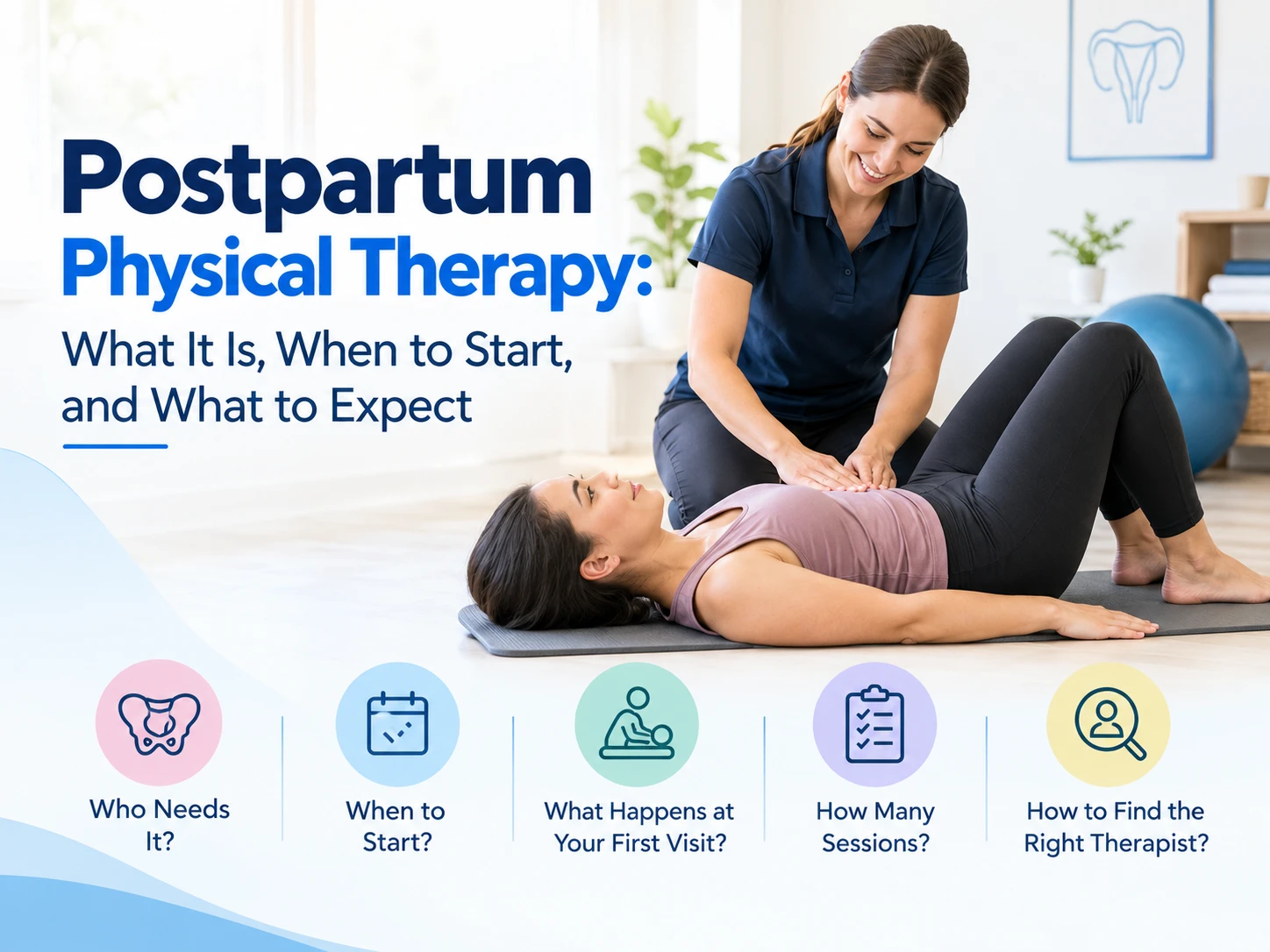
You’ve had your six-week checkup, the doctor says everything looks fine, and you’re cleared to “return to normal.” But normal doesn’t feel like normal. Maybe you leak when you laugh or lift your toddler. Maybe there’s a heaviness in your pelvis by evening, a stubborn gap in your belly, a tender scar, or a lower back that won’t quit. Many new parents quietly assume this is just the price of having a baby.
It isn’t. These are common problems, but common doesn’t mean you have to live with them. Postpartum physical therapy (often called pelvic floor physical therapy) is a specialized, evidence-informed way to assess how your core, pelvic floor, hips, and back are working after birth, and to rebuild them with a plan designed for you.
This guide explains what postpartum physical therapy is, who benefits, when to start, what happens at your first appointment, what treatment looks like, and how to choose a therapist. We also cover where at-home tools fit in, and where they don’t.
Key takeaways
- Postpartum physical therapy assesses and treats the core, pelvic floor, and surrounding muscles after pregnancy and birth.
- You don’t need to have a “serious” problem to benefit, but leaking, pain, heaviness, and a persistent abdominal gap are clear reasons to book.
- Many people start after their six-week checkup, though some begin earlier with a gentler focus. Starting months or even years later is still worthwhile.
- Your first visit is mostly conversation, movement testing, and (with your consent) an optional pelvic floor assessment.
- At-home devices can support a plan but don’t replace an individual assessment.
What Is Postpartum Physical Therapy?
Postpartum physical therapy is rehabilitation delivered by a licensed physical therapist, ideally one with additional training in pelvic and women’s health. Pregnancy and birth place significant demands on the body. The abdominal wall stretches, the pelvic floor supports added weight for months and may be stretched or torn during vaginal delivery, and a cesarean birth involves surgery through multiple tissue layers. Hormones, sleep loss, feeding positions, and carrying a baby add further strain.
A postpartum physical therapist looks at the whole picture: how your deep core and pelvic floor coordinate with your breathing, how your posture and hips are moving, how your scar is healing, and what you need to be able to do day to day, whether that’s lifting a car seat or returning to running.
The Cleveland Clinic’s overview of the pelvic floor muscles explains how these muscles support the bladder, bowel, and uterus and contribute to sexual function, which is why a problem in this area can show up in so many ways.
Why Postpartum Care Is Changing
For years, postpartum care in the United States centered on a single visit around six weeks. The American College of Obstetricians and Gynecologists (ACOG) has since described postpartum care as an ongoing process, recommending contact with a maternal care provider within the first three weeks and a comprehensive visit no later than 12 weeks, with attention to physical recovery along with mood, feeding, and sleep.
Some countries go further. According to one pelvic health clinic’s summary of the fourth trimester, postpartum physical therapy is a routine referral in France and several other European countries. In the U.S., it’s still often something you have to ask about, which is exactly why knowing the signs matters. For a timeline of what typically heals when, see our postpartum pelvic floor recovery timeline.
Who Should See a Postpartum Physical Therapist?
You don’t have to wait for something to go badly wrong. Reasons to book include:
- Urinary leaking with coughing, sneezing, laughing, jumping, or lifting
- Urgency or a frequent, hard-to-control need to urinate
- Heaviness, pressure, or a bulging sensation in the vagina or rectum
- Pelvic, hip, tailbone, or lower back pain that persists
- Pain with intercourse or difficulty using tampons
- A visible gap or doming along the midline of the abdomen (see our article on diastasis recti and the pelvic floor)
- A tender or tight cesarean scar, or discomfort from a perineal tear or episiotomy
- Constipation, straining, or a feeling of incomplete emptying
- Wanting to return to running, lifting, or sport and not knowing how to progress safely
- Feeling disconnected from your core, even if you have no pain
A Livestrong article featuring a physical therapist notes that conditions such as stress incontinence, pelvic organ prolapse, and diastasis recti can all benefit from therapy, and suggests seeing a therapist if pain, incontinence, or pressure continues after roughly six to eight weeks postpartum.
"Common" Is Not the Same as "Normal"
It’s very common to leak a little in the first weeks after birth. It’s less helpful to assume it will fix itself. Many people find that symptoms improve with guided rehabilitation, and early assessment can also catch tightness or coordination problems that a generic exercise routine might worsen. If you’re unsure whether your symptoms are weakness or tension, our guide to tight pelvic floor symptoms explains how to tell the difference, and why more Kegels aren’t always the answer.
When Should You Start Postpartum Physical Therapy?
There’s no single correct date, and it depends on your delivery, healing, and provider’s guidance. Here’s a practical way to think about it:
| Timing | What it often looks like |
|---|---|
| Early postpartum (first 1 to 6 weeks) | Some therapists offer gentle guidance on breathing, positioning, feeding posture, scar care, and safe movement. Options are more limited, and your provider's clearance matters. |
| Around 6 to 12 weeks | The most common starting window, often after your checkup. Full assessment and a structured plan usually begin here. |
| 3 months and beyond | Still an excellent time to start, especially if symptoms persist or you're planning to return to higher-impact exercise. |
| Months or years later | It's rarely "too late." Many people seek help long after birth, including around menopause. |
The most important rule: don’t wait for a perfect moment. If something feels wrong at any stage, say so to your obstetric provider and ask for a referral.
What Happens at Your First Appointment?
Knowing what to expect takes away much of the anxiety. A first visit typically includes:
- A detailed conversation. Your therapist will ask about your pregnancy, delivery (vaginal, cesarean, any tearing or instruments), feeding, sleep, symptoms, medical history, and goals. Expect questions about bladder, bowel, and sexual function; therapists ask these routinely and without judgment.
- Movement and posture assessment. You may be asked to breathe, stand, squat, bridge, or lift while the therapist watches how your core, ribs, hips, and abdomen respond. They may check for a diastasis recti gap and how well your abdominal wall transfers tension.
- An optional pelvic floor assessment. With your informed consent, an internal exam can assess strength, endurance, coordination, tension, tenderness, and any signs of prolapse. If you’re not comfortable, or it’s not appropriate yet, many therapists can also assess externally using observation, breathing patterns, and the surrounding muscles. You can say no or stop at any point.
- A plan. You should leave with a clear explanation of what’s going on and a short home program, often just two or three exercises to start.
As the Livestrong piece describes, a therapist can check the strength, coordination, and flexibility of your core and pelvic floor muscles, which is the foundation for any individualized plan.
What Does Postpartum Physical Therapy Treatment Include?
Treatment is tailored, but common components include:
Breathing and Core Reconnection
Many plans begin with coordinating your breath, deep abdominal muscles, and pelvic floor. This “reconnection” is the base for everything else, including returning to workouts.
Pelvic Floor Strengthening, Relaxation, or Both
Not every pelvic floor needs strengthening. Some need to learn to relax. Your therapist will teach contractions, full releases, and functional use of the pelvic floor during real-life movements such as lifting, coughing, and getting up from the floor.
Diastasis Recti and Abdominal Wall Rehabilitation
Rather than endless crunches, treatment usually focuses on restoring tension and coordination along the midline, then gradually increasing load.
Manual Therapy and Scar Work
Hands-on techniques can ease tension in the pelvic floor, hips, and back. Therapists can also teach scar massage for cesarean or perineal scars once healed, which may help with tightness or sensitivity.
Biofeedback and Other Tools
Your therapist may use biofeedback to show you real-time muscle activity, or discuss electrical stimulation in selected cases. These are usually used within a plan, not instead of one.
Posture, Feeding, and Daily-Life Mechanics
Positions for nursing, carrying a baby, getting out of bed, and lifting a stroller all affect your pelvic floor and back. Small changes can reduce strain.
Return to Exercise
A good therapist helps you progress logically, for example from walking to jogging to running, or from bodyweight work to heavier lifting, based on how your pelvic floor and core respond. ACOG-aligned guidance, as reported by Motherly and Femina PT, suggests easing back gradually and stopping to see a pelvic health therapist if you notice leaking, pelvic heaviness, or pain.
Examples of Exercises a Therapist Might Start With
Every plan is individual, so treat these as illustrations rather than a prescription:
- Diaphragmatic (belly) breathing to coordinate the diaphragm and pelvic floor
- Gentle pelvic floor lifts and full releases, paced to your ability
- Heel slides and marching to practice core control without bracing
- Glute bridges to build hip strength
- Side-lying leg lifts for hip stability
- Supported squats to connect the pelvic floor with everyday movement
If you’d like to explore gentle release work between visits, our guide to pelvic floor stretches walks through relaxation-focused options. And if you’re not sure you’re doing Kegels correctly, read signs you’re doing Kegels wrong before ramping up repetitions.
How Many Sessions Will You Need?
It varies widely. Some people need just a few visits to learn a home program and confirm they’re on the right track. Others, especially those with pain, prolapse symptoms, or complex scarring, benefit from a longer course. A common pattern is an initial evaluation, followed by sessions every one to three weeks, tapering as you progress. Ask your therapist for an estimated plan and how progress will be measured.
What about cost and insurance? Coverage differs by country, insurer, and plan. In many cases a referral from your obstetric provider helps, and some plans cover a set number of visits. Call your insurer before your first appointment and ask what’s included. If cost is a barrier, ask clinics about shorter plans, group classes, or telehealth options, which can be useful for education and exercise coaching though they can’t replace hands-on assessment when that’s needed.
Cesarean, Tearing, or Vaginal Birth: Does It Change Anything?
Yes, but everyone benefits from assessment.
- After a cesarean birth, the pelvic floor still carried the weight of pregnancy, and scar healing and abdominal wall function are major focuses.
- After tearing or an episiotomy, therapists often address scar mobility, tenderness, pain with intercourse, and pelvic floor coordination.
- After an uncomplicated vaginal birth, you can still have weakness, tension, or coordination problems, and a check-in can prevent small issues from becoming long-term ones.
- If you’re breastfeeding, hormonal changes can affect tissue comfort, so mention any dryness or discomfort to your clinician.
Where At-Home Devices Fit In
Pelvic floor devices can complement therapy, but they work best with guidance, especially in the early postpartum months, when healing, scar tissue, and tension patterns are still changing.
- Resistance tools such as our Kegel exercise balls add gentle weighted feedback once you’re cleared and confident in your technique.
- Biofeedback tools like our pelvic floor biofeedback probe show what your muscles are doing, which helps confirm contractions and, just as importantly, releases.
- Electrical stimulation devices, such as our electronic pelvic toner, trigger contractions directly. These have contraindications (including pregnancy and implanted devices) and may not suit people with a tight or painful pelvic floor.
Check with your provider before starting any internal device postpartum, particularly in the first months. Our device comparison page and complete guide to pelvic floor therapy devices explain the differences, and our postpartum category collects more recovery resources.
How to Choose a Postpartum Physical Therapist
Look for someone with training specific to pelvic and women’s health. Questions worth asking:
- What additional training do you have in pelvic health and postpartum care?
- How many postpartum patients do you typically treat?
- Do you offer internal and external assessment options, and how is consent handled?
- Will I get a written plan and a clear explanation of what you find?
- How do you decide when I’m ready to return to running, lifting, or sport?
- What are the costs, and can you provide documentation for insurance?
In the United States, the Academy of Pelvic Health Physical Therapy maintains the PT Locator directory, where you can search for therapists who list pelvic and abdominal health expertise. The directory notes that listings are not endorsements, so it’s still worth asking the questions above.
Common Myths About Postpartum Physical Therapy
- “It’s only for people who had a traumatic birth.” Not so. Weakness, tension, and coordination issues occur after all types of birth.
- “I’ll just do Kegels at home.” Kegels help many people, but without an assessment you may be doing them incorrectly or doing the wrong thing entirely. Some people need relaxation first.
- “If I wasn’t cleared to exercise at six weeks, I did something wrong.” Healing timelines vary, and a gradual progression is normal.
- “It’s too late because my baby is a year old (or five).” Pelvic floor rehabilitation can help months or years after birth.
- “The exam will be painful or embarrassing.” A good therapist explains everything, asks for consent, and adapts to your comfort level.
Frequently Asked Questions
What is postpartum physical therapy?
It’s rehabilitation from a licensed physical therapist, often with pelvic health training, that assesses and treats the core, pelvic floor, hips, back, and scars after pregnancy and birth. It’s tailored to your symptoms, delivery, and goals.
When should I start postpartum physical therapy?
Many people begin after their six-week checkup, though some therapists see patients earlier for gentle guidance. If you have leaking, pain, heaviness, or a persistent abdominal gap, ask your provider about a referral rather than waiting. It’s also fine to start months or years later.
Do I need a referral for postpartum physical therapy?
Requirements vary by location and insurance. In some places you can book directly, while others require a referral. Contact your insurer and the clinic to confirm.
Is the pelvic floor exam painful?
It shouldn’t be painful. Therapists explain each step, ask for your consent, and can pause or stop whenever you wish. Some clinics also offer external-only assessments.
Can postpartum physical therapy help with diastasis recti?
Yes, therapists commonly assess and treat diastasis recti with breathing, deep core coordination, and progressive strengthening. Our article on diastasis recti and the pelvic floor covers what the research says.
How is postpartum physical therapy different from going to the gym or doing Kegels at home?
A therapist evaluates your individual pattern, such as weakness, tension, or coordination, and chooses exercises accordingly. General gym programs and Kegel routines aren’t individualized and may not address the underlying cause.
Can I use pelvic floor devices while doing physical therapy?
Often yes, but check with your therapist first so devices fit your plan, especially in the first months after birth or if you have pain or prolapse symptoms.
