
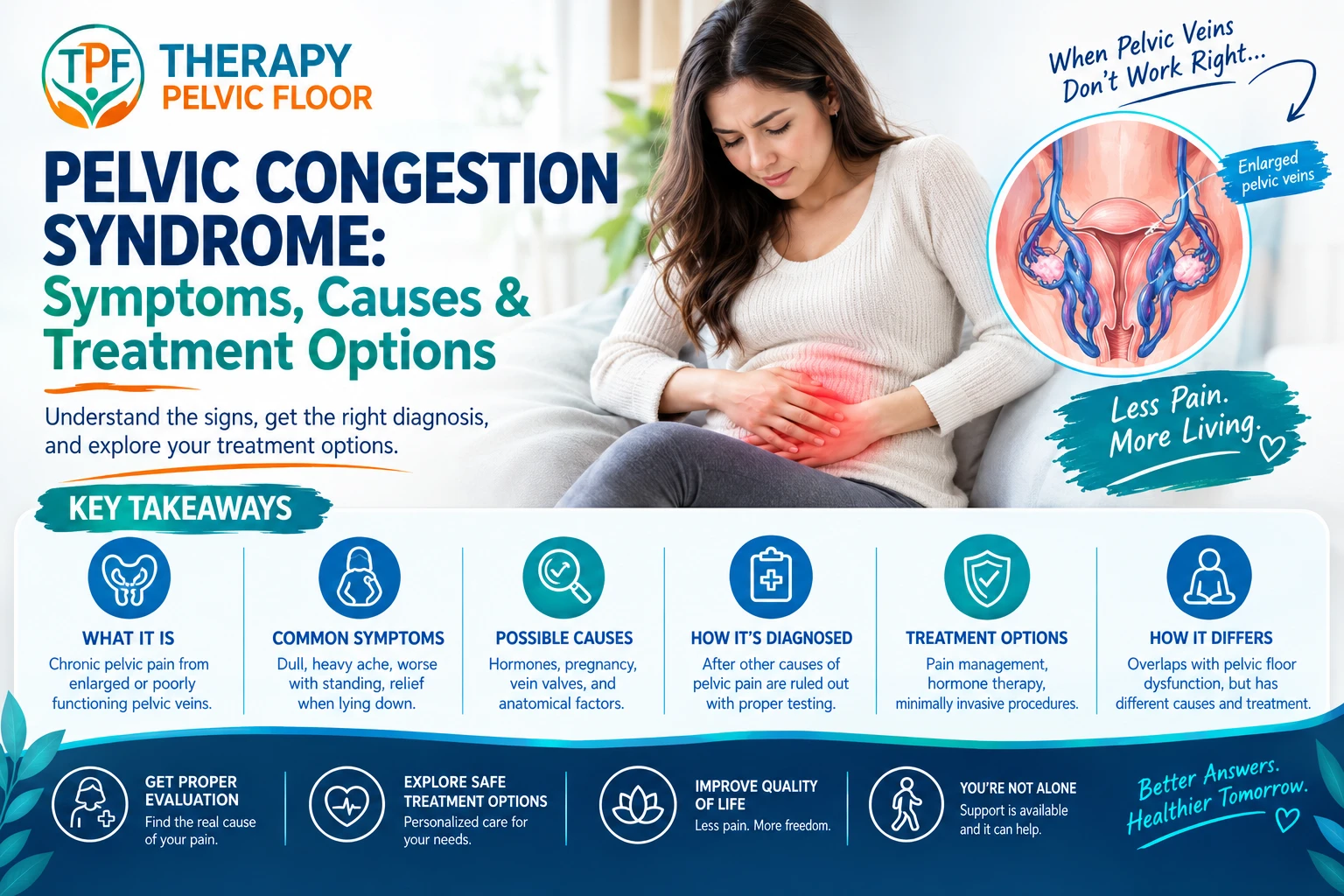
A dull, heavy ache deep in the pelvis that gets worse as the day goes on. Pain that eases when you lie down but returns when you stand. Discomfort during or after sex, or before your period. If you’ve lived with symptoms like these for months, and tests haven’t shown an obvious cause, you may have come across a condition called pelvic congestion syndrome.
It’s often overlooked, partly because the symptoms overlap with many other causes of chronic pelvic pain, including pelvic floor muscle problems. This guide explains what pelvic congestion syndrome is, the common symptoms, what’s known about causes, how doctors diagnose it, how it differs from pelvic floor dysfunction, and the treatment options to discuss with a healthcare provider.
Key takeaways
- Pelvic congestion syndrome involves chronic pelvic pain linked to enlarged or poorly functioning veins in the pelvis, where blood can pool.
- It’s now often called pelvic venous disease or pelvic venous disorder.
- The hallmark symptom is a dull, heavy pelvic ache lasting three months or longer, often worse after standing.
- It’s usually diagnosed after other causes of pelvic pain have been ruled out, so see a medical provider for evaluation.
- Treatments range from pain management and hormone-suppressing medication to minimally invasive vein procedures.
What Is Pelvic Congestion Syndrome?
According to the Cleveland Clinic, pelvic congestion syndrome (PCS) involves chronic pelvic pain that isn’t related to menstruation or pregnancy, and it occurs when blood pools in the veins of the pelvis and causes pain. It mostly affects people who haven’t yet gone through menopause and is rare afterward.
The Merck Manual’s patient overview similarly describes pelvic congestion as chronic pelvic pain tied to varicose veins in or near the ovaries.
A Note on Names
Medical terminology has shifted. Hinge Health notes that pelvic congestion syndrome is now more commonly referred to as pelvic venous disease, and clinicians may also use the terms pelvic venous disorders or pelvic venous insufficiency. If you’re searching for information or speaking to a provider, using any of these names is fine.
Pelvic Congestion Syndrome Symptoms
Symptoms vary from person to person, and they often develop gradually.
The most common symptom is chronic pelvic pain. This is typically described as a dull, heavy, or aching sensation lasting three months or longer. Features that may point toward a venous cause include:
- Pain that worsens with prolonged standing or sitting and tends to build through the day
- Relief when lying down
- Pain during or after intercourse
- Pain that is worse around your period or before it
- Lower back pain or aching in the hips or thighs
- A sense of heaviness or fullness in the pelvis
Other symptoms that may occur include:
- Visible varicose veins in the vulva, buttocks, or upper thighs
- Bladder symptoms, such as urgency or pain with urination
- Bowel symptoms, such as constipation or diarrhea similar to irritable bowel
- Fatigue or low mood related to living with ongoing pain
The Cleveland Clinic notes that some of these overlapping symptoms, including urinary and bowel changes, are reported in PCS. Because they’re also common in many other conditions, symptoms alone can’t confirm the diagnosis.
What Causes Pelvic Congestion Syndrome?
Researchers don’t fully understand why pelvic congestion syndrome develops. The main idea is that veins in the pelvis, particularly around the ovaries and uterus, don’t carry blood back efficiently. Valves inside the veins, which normally keep blood flowing in one direction, may not close properly, allowing blood to flow backward and pool. Over time, the veins can stretch and widen, creating pressure and pain.
Factors that may contribute include:
- Pregnancy. Pelvic blood flow increases significantly during pregnancy, and the veins stretch. PCS is more often described in people who have been pregnant, particularly more than once.
- Hormones. Estrogen may affect vein walls, which is why some treatments aim to lower estrogen activity.
- Vein valve dysfunction. Valves that don’t work well make backward flow more likely.
- Anatomical differences in how veins are arranged or compressed.
It’s important to note that no single cause has been proven, and the Cleveland Clinic states that the condition isn’t preventable. Having PCS isn’t your fault, and it isn’t caused by anything you did.
How Common Is It?
Estimates vary, partly because the condition is under-recognized and typically diagnosed only after other causes are ruled out. Some sources suggest it may account for a meaningful share of chronic pelvic pain cases in women, but because figures differ widely between studies, treat any single number cautiously.
Pelvic Congestion Syndrome vs. Other Causes of Pelvic Pain
Chronic pelvic pain has many possible causes, and several can occur at once. This table shows how PCS compares with some common alternatives:
| Condition | Typical clues | Why it can be confused with PCS |
|---|---|---|
| Pelvic congestion syndrome | Heavy ache, worse when standing, better lying down | The condition itself |
| Endometriosis | Pain that is strongly cyclical, painful periods, pain with sex | Shares period-related and intercourse pain |
| Fibroids or ovarian cysts | Heavy bleeding, pressure, visible on imaging | Cause pressure and pelvic aching |
| Pelvic floor muscle dysfunction | Pain with sex, muscle tightness, urinary or bowel symptoms | Overlapping pain, bladder, and bowel symptoms |
| Interstitial cystitis | Bladder pain and urgency | Overlaps with urinary symptoms |
| Irritable bowel syndrome | Bloating, bowel changes | Overlaps with bowel symptoms |
| Pelvic inflammatory disease | Fever, discharge, acute pain | Can cause chronic pain |
Because so many conditions overlap, a careful medical evaluation matters. You may have more than one issue at once.
PCS vs. Pelvic Floor Dysfunction: What's the Difference?
This is where many people get confused, and it’s an important distinction for anyone researching pelvic health.
Pelvic congestion syndrome involves the veins. The problem is blood flow and pooling.
Pelvic floor dysfunction involves the muscles. The Cleveland Clinic’s pelvic floor dysfunction overview describes it as an inability to relax, contract, or coordinate the pelvic floor muscles properly, leading to problems with urination, bowel movements, sexual function, and pain.
The two can look alike, and they can also coexist. Chronic pain from any cause can lead the pelvic floor muscles to tense up protectively, which may add pain and urinary or bowel symptoms on top of the underlying problem. If you’ve been told you have a tight pelvic floor but treatment hasn’t fully helped, it’s reasonable to ask your provider whether other contributors, such as venous disease, have been considered. Our guide to tight pelvic floor symptoms explains the muscle side in more detail.
An important point: exercises, stretches, or devices that target the pelvic floor muscles will not repair veins. They may help with a muscle component of pain, but they’re not a treatment for pelvic venous disease itself.
How Is Pelvic Congestion Syndrome Diagnosed?
The Cleveland Clinic explains that PCS is generally diagnosed after other causes of pelvic pain have been excluded. A typical evaluation may include:
- A detailed history and physical exam, including when pain occurs and what makes it better or worse.
- Pelvic ultrasound, sometimes with Doppler to assess blood flow, which can show dilated veins or reversed flow.
- CT or MRI, which may help visualize enlarged pelvic veins and rule out other conditions.
- Venography or other vascular imaging, where contrast dye is used to look at pelvic veins, and which may be done by an interventional radiologist or vascular specialist.
- Laparoscopy, occasionally, to rule out conditions like endometriosis.
Hinge Health notes that because PCS shares symptoms with other pelvic conditions, imaging is often used to confirm the diagnosis. You may be referred to a gynecologist, a vascular specialist, or an interventional radiologist, depending on your symptoms and location.
Pelvic Congestion Syndrome Treatment Options
There isn’t one standard treatment, and the Cleveland Clinic says PCS can’t be cured, but medications and procedures can ease symptoms. Treatment is typically individualized based on how severe your symptoms are, how much they affect your life, and your health history and goals, including whether you hope to become pregnant.
Pain Management and Lifestyle Approaches
Early options may include over-the-counter or prescription pain relief and strategies to reduce pooling, such as avoiding long periods of standing, taking movement breaks, and elevating the legs. Some clinicians also discuss compression garments. Ask your provider which of these suit you.
Hormonal Medications
Because estrogen may influence vein behavior, the Cleveland Clinic notes that medications that suppress estrogen production can lessen pain associated with PCS. These have side effects and aren’t right for everyone, so they should be discussed carefully with your gynecologist.
Minimally Invasive Procedures
For people with persistent symptoms, procedures that treat the abnormal veins are an option:
- Embolization, in which a specialist uses a catheter to block problematic pelvic veins, redirecting blood flow
- Sclerotherapy, which uses a solution to close affected veins
A systematic review of treatment outcomes in PCS has examined how well these approaches work, and the Cleveland Clinic says outcomes of interventions for pain relief are excellent, although there’s no standard approach. Symptoms can sometimes return, and individual results vary, so discuss risks, benefits, and alternatives with a specialist.
Surgery
Surgical options are less commonly used but may be considered in selected cases, typically after less invasive approaches.
Outlook
The Cleveland Clinic states that PCS isn’t life-threatening. Many people see meaningful improvement with treatment, but it can take time to find the right combination.
Where Movement and Physical Therapy Fit In
Because blood pooling is part of the problem, gentle movement such as walking can help circulation, and some physical therapy resources suggest exercises to support symptom management. Hinge Health, for example, describes movement-based approaches alongside medical treatment.
If pain has led to pelvic floor muscle tension, a pelvic floor physical therapist may also help with breathing, relaxation, and muscle release. Our pelvic floor stretches guide covers gentle relaxation techniques, though you should check with your provider before starting anything if you have significant pain. To find a therapist trained in pelvic pain, try the Academy of Pelvic Health Physical Therapy’s PT Locator.
Pelvic Floor Devices and Pelvic Congestion Syndrome
It’s worth being clear: pelvic floor trainers, balls, and electrical stimulation devices are designed for muscle training, not for treating vein conditions. If you have chronic pelvic pain, particularly pain with intercourse or internal pressure, get a diagnosis before using any internal device, since added stimulation or pressure may worsen discomfort. Our pelvic floor exerciser guide explains which types suit which problems and who should avoid them.
Pelvic Pain After Pregnancy
Because PCS is more commonly described in people who’ve been pregnant, some readers first notice symptoms in the months or years after childbirth. Pelvic pain after birth has many possible causes, including pelvic floor tension, scar tissue, and pelvic girdle problems. See our guides to postpartum physical therapy and the postpartum recovery timeline for what’s typical, and talk to your provider if pain persists beyond what you expect.
When to See a Doctor
Book an appointment if you have:
- Pelvic pain lasting more than three months
- Pain that disrupts work, exercise, sleep, or intimacy
- Pain that worsens with standing and eases lying down
- New visible varicose veins in the pelvic or vulvar area
- Symptoms that haven’t been explained after previous tests
Seek urgent care for sudden severe pelvic pain, fever, heavy bleeding, fainting, or if you could be pregnant and have significant pain. These may signal conditions requiring prompt attention.
Common Myths About Pelvic Congestion Syndrome
- “Pelvic pain is normal for women.” Persistent pain isn’t something you have to accept.
- “If tests were normal, the pain isn’t real.” Routine tests can miss some causes, which is part of why PCS is often diagnosed late.
- “Kegels will fix it.” Pelvic floor exercises don’t treat vein problems, and for some people with muscle tension they can make symptoms worse.
- “It only happens after pregnancy.” Pregnancy is a common association, but not the only one.
- “It’s dangerous.” The Cleveland Clinic states it isn’t life-threatening, though it can seriously affect quality of life.
Frequently Asked Questions
What is pelvic congestion syndrome?
It’s a condition in which blood pools in the veins of the pelvis, causing chronic pelvic pain, often described as a heavy ache that worsens with standing. It’s now commonly called pelvic venous disease.
What are the most common pelvic congestion syndrome symptoms?
Chronic pelvic pain lasting three months or more is the hallmark. Others include pain that worsens after standing or sex, lower back pain, heaviness in the pelvis, visible varicose veins, and bladder or bowel symptoms.
Can pelvic congestion syndrome go away on its own?
It generally doesn’t resolve without management, though symptoms can fluctuate. Talk to a provider about options if your pain persists.
How is pelvic congestion syndrome treated?
Options range from pain management and lifestyle changes to hormone-suppressing medications and minimally invasive procedures such as embolization or sclerotherapy. The best option depends on your symptoms and goals.
Is pelvic congestion syndrome the same as pelvic floor dysfunction?
No. PCS involves pelvic veins, while pelvic floor dysfunction involves the muscles. They can look similar and can occur together.
Does pelvic congestion syndrome affect fertility or pregnancy?
Some sources discuss possible links, but evidence is limited and individual situations differ. If you’re planning pregnancy, discuss your symptoms and treatment options with your provider.
Can I exercise with pelvic congestion syndrome?
Many people find gentle movement like walking helpful, while prolonged standing and high-strain activities may aggravate symptoms. Ask your provider or a physical therapist for guidance based on your situation.
Who should I see if I think I have pelvic congestion syndrome?
Start with your primary care provider or gynecologist, who may refer you to a vascular specialist or interventional radiologist for imaging and treatment.
