
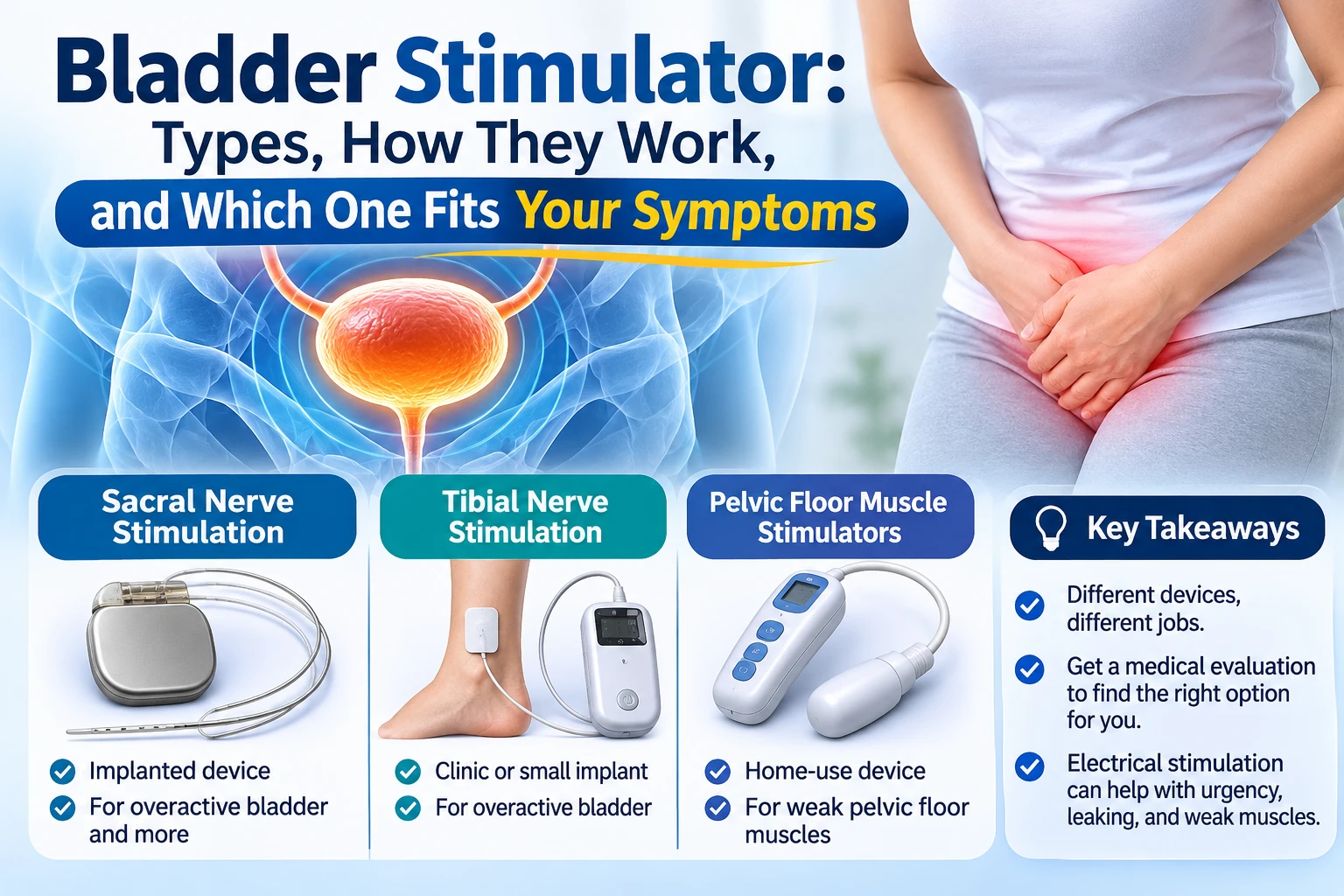
Search for a bladder stimulator and you’ll land on a confusing mix of results: surgical implants, clinic procedures, and home-use gadgets. They’re very different things, and they treat different problems. Choosing between them starts with understanding what each one actually does.
This guide explains what people usually mean by a bladder stimulator, how electrical stimulation can affect bladder control, and the main types: sacral nerve stimulation, tibial nerve stimulation, and home pelvic floor muscle stimulators. You’ll also see which symptoms each type suits, who should avoid home devices, and what to ask your doctor.
📌 Key takeaways
- “Bladder stimulator” can refer to implanted or clinic-based nerve stimulators for overactive bladder, or to home pelvic floor muscle stimulators that help train weak muscles.
- Nerve stimulation is generally considered after behavioral changes and medication haven’t worked well enough. Muscle stimulators are typically aimed at weak pelvic floor muscles and stress-type leaking.
- Research supports electrical stimulation as more helpful than no treatment for some forms of incontinence, but it isn’t proven to beat good pelvic floor exercises.
- Get a medical evaluation before choosing, since urgency, leaking, and retention can have different causes.
What Does "Bladder Stimulator" Mean?
There’s no single device called “the bladder stimulator.” The term usually covers three groups:
- Implanted sacral nerve stimulators (sacral neuromodulation), placed by a specialist to influence the nerves that control the bladder
- Tibial nerve stimulation, which targets a nerve near the ankle and is delivered in a clinic or, in newer systems, through a tiny implant
- Pelvic floor muscle stimulators, home-use devices that deliver gentle electrical pulses to make the pelvic floor muscles contract
All three use electricity, but the target differs. The first two aim at the nerve signals between the brain and bladder. The third aims at the muscles that help hold urine in. That difference determines who each option suits.
It’s also worth noting that “bladder stimulation” is occasionally used for treatments that help people who can’t empty their bladder. If that’s your concern, discuss it with a urologist rather than shopping for a device.
How Can Electrical Stimulation Help Bladder Control?
There are two main routes:
- Calming overactive nerve signals (neuromodulation). In overactive bladder (OAB), the bladder may signal the need to urinate too often or too urgently. Stimulating certain nerves is thought to change those signals so the bladder behaves more normally. The Cleveland Clinic explains that sacral nerve stimulation uses an implanted device that sends mild electrical impulses to nerves controlling the bladder and bowel, modifying communication between the brain and those organs to give you more control.
- Training weak muscles (muscle stimulation). In stress incontinence, leaking often happens when pelvic floor muscles can’t close the urethra firmly during coughing, sneezing, or exercise. Stimulating those muscles makes them contract, which can help train strength and coordination, particularly if you struggle to contract them voluntarily.
The Main Types of Bladder Stimulators
| Type | How it’s delivered | Typically used for | Who sets it up |
|---|---|---|---|
| Sacral nerve stimulation | Implanted lead and device near the sacral nerves | Overactive bladder, urgency/urge incontinence, some bowel problems, when other treatments haven’t worked well enough | Specialist (urologist, urogynecologist) |
| Percutaneous tibial nerve stimulation (PTNS) | Fine needle near the ankle, in repeated clinic sessions | Overactive bladder | Clinic |
| Implantable tibial nerve stimulators | Very small implant near the ankle, powered externally | Overactive bladder (newer option) | Specialist |
| Home pelvic floor muscle stimulators | Internal probe or external pads connected to a handheld unit | Weak pelvic floor, stress-type leaking, muscle re-training | You, following instructions or professional guidance |
Sacral Nerve Stimulation
According to the Cleveland Clinic, sacral nerve stimulation is considered for people with overactive bladder or bowel incontinence when other treatments aren’t effective. A small device is implanted, usually after a trial period to see if it helps, and sends mild impulses to the sacral nerves.
The Cleveland Clinic notes that research has shown the treatment consistently reduces incontinence and overactive bladder symptoms, and cites a five-year follow-up in which symptoms were reduced for about two-thirds of study participants. Individual results vary, and it’s a procedure with its own risks and follow-up needs, so it’s something to discuss in detail with a specialist.
Tibial Nerve Stimulation
Tibial nerve stimulation targets a nerve that runs from the ankle toward the bladder. The Cleveland Clinic’s overactive bladder care page describes how this nerve can be stimulated through a very small needle as part of nerve stimulation treatment for OAB. Traditional treatment involves a series of clinic visits, which is one reason newer implantable versions are being developed.
Both sacral and tibial approaches fit into a stepped approach: behavioral changes and pelvic floor training first, medication next, and nerve stimulation or other procedures for people who haven’t improved enough.
Home Pelvic Floor Muscle Stimulators
This is the category most online shoppers actually mean. A pelvic floor muscle stimulator is a home-use device that sends low-level electrical pulses through an internal probe or external electrode pads to make the pelvic floor muscles contract. It works on the muscles, not on the bladder’s nerve signaling.
What Does the Evidence Say?
A Cochrane review of electrical stimulation with non-implanted devices for stress urinary incontinence in women found that electrical stimulation probably improves incontinence-related quality of life compared with no treatment, but there may be little or no difference compared with pelvic floor muscle training, and robust conclusions about overall effectiveness weren’t possible.
A broader Cochrane overview concluded there is moderate to high certainty evidence that electrical stimulation is more beneficial than control for improving or curing urinary incontinence in women, and that combining it with pelvic floor training may improve quality of life.
In plain terms: electrical stimulation is a legitimate tool, but it isn’t a guaranteed fix, and studies mostly tested clinical protocols rather than every consumer device. Pelvic floor muscle training itself has strong support from Cochrane research and is usually the first step.
Examples From Our Range
- TPFHealth Electronic Pelvic Toner: a home pelvic floor stimulator with adjustable intensity starting at level 00, an ergonomic probe, a screen guide, and multiple training modes. Our pelvic toner guide explains how it works and how to use one.
- Low-frequency pulse pelvic floor machine: offers pelvic floor muscle training, biofeedback training, and diastasis recti training modes, and includes a probe and electrode pads.
- Accessories: a universal biofeedback probe and 5cm×5cm electrode pads for compatible devices.
These are home-use wellness devices, not implanted nerve stimulators or clinic procedures, and they aren’t a substitute for medical evaluation. Please read each product page for contraindications and instructions.
Which Type Fits Which Symptom?
| Your main symptom | What might be going on | What to discuss |
|---|---|---|
| Leaking with cough, sneeze, laugh, or exercise (stress incontinence) | Weak or poorly coordinated pelvic floor muscles | Pelvic floor training first; a muscle stimulator may help some people |
| Sudden, strong urges and frequent urination (overactive bladder) | Overactive bladder signaling | Bladder training, medication; nerve stimulation if other treatments fail |
| Both stress and urge symptoms (mixed) | A combination | Individualized plan from a clinician |
| Difficulty emptying, weak stream, hesitancy | Retention, tight pelvic floor, or other causes | Medical evaluation; avoid assuming you need strengthening |
| Pelvic pain with urgency | Could be pelvic floor tension or another condition | Assessment first; stimulation may not suit a tight pelvic floor |
Muscle stimulators generally suit the first row best. For urgency and frequency, the evidence base for nerve stimulation and other treatments is a more relevant conversation to have with your doctor. If you’re unsure which pattern fits you, our guide on how to tell if your pelvic floor is tight or weak can help you spot patterns, though it can’t diagnose you.
Who Should Avoid a Home Bladder or Pelvic Floor Stimulator?
Manufacturers commonly list these as reasons not to use stimulation devices. Always read your device’s specific warnings:
- Pregnancy
- A pacemaker or other implanted electronic device
- Active urinary tract or vaginal infection
- Unhealed wounds or recent pelvic surgery
- Certain heart conditions or epilepsy
- Heavy menstrual bleeding, depending on the device
- Undiagnosed pelvic pain or abnormal bleeding
Also check first if you have prolapse, blood in your urine, or incomplete bladder emptying, since these need evaluation rather than self-treatment.
A tight pelvic floor deserves special mention. Stimulation triggers contraction, so if you already have pelvic pain, urgency without much leaking, or pain with sex, adding stimulation may not help and can sometimes worsen symptoms. See an assessor before starting.
What to Try Before (or Alongside) a Stimulator
Many guidelines favor simpler measures first, and several are well supported by Cochrane’s overview of conservative treatments:
- Pelvic floor muscle training, done correctly and consistently. If you’re unsure about technique, read signs you’re doing Kegels wrong.
- Bladder training, gradually extending the time between bathroom visits
- Fluid and caffeine adjustments, since caffeine and alcohol can irritate the bladder in some people
- Weight management, where relevant
- Treating constipation, which can put pressure on the bladder
- Professional guidance. A pelvic floor physical therapist can identify what your muscles need. The NIDDK’s overview of bladder control problems is a good general reference.
If you’re postpartum, see our guides to postpartum physical therapy and the recovery timeline. Men dealing with bladder symptoms, including after prostate surgery, should read our article on pelvic floor physical therapy for men, since most consumer stimulators are designed for women.
How to Use a Home Muscle Stimulator Safely
General guidance, always secondary to your device’s manual:
- Confirm you’re suitable and have clearance if you’re postpartum or have a medical condition.
- Start at the lowest intensity. Increase gradually to a clear but comfortable contraction.
- Keep sessions within the recommended time, commonly 20 to 30 minutes, and use the device on the recommended number of days (often 3 to 5 per week).
- Stop if you feel pain, burning, or irritation.
- Clean the probe or pads after each use and store the device properly.
- Combine with voluntary exercises when appropriate, since training your own control matters for daily life.
- Track your symptoms so you can tell whether it’s helping.
Our pelvic floor exerciser guide compares the main device types, and our comparison page shows our products side by side.
Questions to Ask Your Doctor
Bring these to your appointment:
- What do you think is causing my symptoms: weak muscles, overactive signaling, or something else?
- Which tests, such as a urine test or bladder diary, would help?
- What should I try first, and how long before we reassess?
- Would pelvic floor physical therapy help?
- Is a home muscle stimulator appropriate for me, or would it be unsafe?
- When would nerve stimulation or other procedures be worth considering?
To find a physical therapist trained in this area, try the Academy of Pelvic Health Physical Therapy’s PT Locator.
When to Seek Urgent Medical Care
Contact a healthcare provider promptly if you have:
- Blood in your urine
- Fever, chills, or burning with urination
- Inability to urinate, or severe lower abdominal pain
- Sudden loss of bladder or bowel control, especially with back pain or numbness in the groin or inner thighs
These can signal conditions that need prompt treatment.
Frequently Asked Questions
It’s a general term for electrical stimulation devices or treatments aimed at improving bladder control. It can mean implanted or clinic-based nerve stimulation for overactive bladder, or home devices that stimulate the pelvic floor muscles.
Research supports electrical stimulation as more helpful than no treatment for some types of incontinence. Nerve stimulation is an established option for overactive bladder when other treatments aren’t enough, while home muscle stimulators are mainly relevant to weak pelvic floor muscles. Results vary, and none are guaranteed.
Sacral nerve stimulation uses an implanted device to influence the nerves controlling the bladder and bowel. A pelvic floor muscle stimulator is a home device that makes the muscles contract. They treat different problems.
Home muscle stimulators aren’t the same as nerve stimulation treatments for overactive bladder. Discuss urgency and frequency with your doctor to find the right approach before buying a device.
Not always. A pelvic floor trainer may use stimulation, resistance, or biofeedback. Electronic trainers that use electrical pulses are one kind of pelvic floor muscle stimulator.
Many sources suggest weeks to a few months of consistent use. If you notice no change after about 12 weeks, or symptoms worsen, seek an assessment.
Some stimulation treatments are used in men, but most consumer pelvic floor stimulators are designed for female anatomy. Men should check the intended use and speak with a clinician first.
Home electrical stimulation devices are generally not recommended during pregnancy. Ask your obstetric provider about safer alternatives.
Implanted and clinic-based treatments require a specialist. Home pelvic floor stimulators are sold as wellness devices in many places, but regulations vary, so read the manufacturer’s information and check with your provider.
