
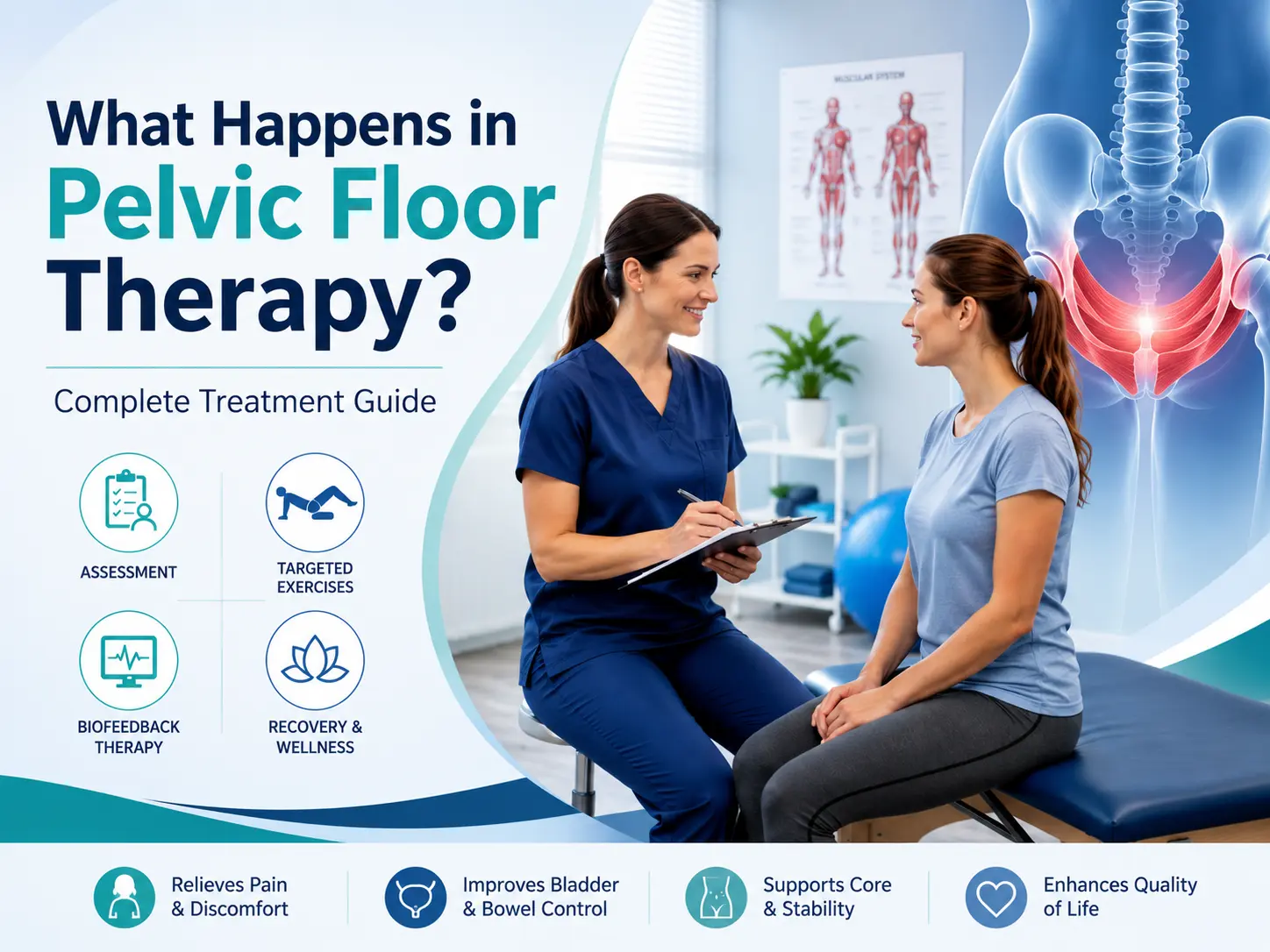
A woman in her mid-thirties sits in a waiting room, unsure what to expect. Her doctor mentioned pelvic floor therapy almost in passing, the way you’d mention physical therapy for a sore knee. But this feels different. More personal. She has questions she didn’t think to ask during the appointment, and now, sitting there, she wonders what actually happens once she’s called back.
If that sounds familiar, you’re not alone. Pelvic floor therapy is one of those treatments people get referred to without much explanation. That uncertainty alone can be enough to make someone put off booking that first session for months.
So let’s clear that up. This pelvic floor therapy guide walks through what it actually involves. You’ll learn who tends to benefit from it, and what to realistically expect from your first visit through recovery. By the end, you’ll have a much clearer picture of whether it’s worth pursuing for what you’re dealing with.
What Is Pelvic Floor Therapy?
Pelvic floor therapy is a specialized form of physical therapy. It focuses on the muscles, ligaments, and connective tissue that support your bladder, uterus, and bowel. Therapists use it to treat a wide range of issues, from bladder leakage to pelvic pain. It works by directly targeting the muscle group most people never think about until something goes wrong with it.
Understanding the Pelvic Floor
Here’s where it helps to back up a little. What pelvic floor are we even talking about?
Think of it as a muscular sling stretched across the base of your pelvis, running roughly from the pubic bone at the front to the tailbone at the back. So what is the pelvic floor in women, specifically? It’s this same supportive structure, shaped and positioned to accommodate the uterus and vagina in addition to the bladder and rectum. That’s part of why women experience pelvic floor issues more frequently than men do, particularly after pregnancy or during menopause.
If you’re trying to locate it yourself, where is the pelvic floor muscle exactly? Try this: the next time you’re urinating, attempt to stop the flow midstream. The muscles you feel engaging are your pelvic floor. That’s not something you want to practice regularly, since it can interfere with complete bladder emptying. But it’s a useful one-time way to identify the muscle group we’re discussing.
What Does the Pelvic Floor Do?
This muscle group does more heavy lifting than most people realize. It supports your pelvic organs against gravity. It controls the release of urine, stool, and gas, and it even plays a role in core stability and sexual function. When it’s working well, you don’t notice it at all. When it isn’t, the effects tend to show up in ways that are hard to ignore — whether that’s leakage, pain, or a persistent feeling of pressure.
What Do They Do in Pelvic Floor Therapy?
This is usually the question people actually want answered before their first appointment, and reasonably so. Walking into a session without knowing what to expect makes an already sensitive topic feel more intimidating than it needs to be.
Initial Assessment
Your first visit typically starts with a conversation, not an examination. A pelvic floor therapist will ask about your symptoms, medical history, childbirth history if applicable, and daily habits that might be contributing to the issue. This part feels a lot like any other medical intake. It’s your chance to mention anything that feels relevant, even if it seems minor.
Physical Examination
From there, the therapist may perform an external and, in many cases, an internal examination to assess muscle tone, tension, and coordination. This can sound daunting if you’ve never experienced it. But the therapist conducts it with the same professionalism as any other physical therapy assessment, and you’re always in control of the pace.
When needed, the therapist usually performs the internal component with a single gloved finger rather than any instrument, and it lasts only a few minutes. Therapists explain each step before doing it, and you can ask them to stop at any point. Most patients say the anticipation beforehand is far worse than the exam itself. Once it’s actually happening, it tends to feel more clinical than uncomfortable.
Pelvic Floor Muscle Testing
Muscle testing helps determine whether your pelvic floor is too weak, too tight, or uncoordinated. Treatment differs significantly depending on which of these is the underlying issue. A muscle that’s overly tense, for example, needs relaxation techniques rather than strengthening exercises. That’s why this step matters so much for getting the treatment plan right.
Treatment Planning
Once the assessment is complete, your therapist puts together a plan tailored to what they’ve found. This might include manual therapy, specific exercises, biofeedback, or a combination of approaches, along with a rough timeline for what progress might look like.
What Happens During Pelvic Floor Therapy?
So what happens during pelvic floor therapy sessions themselves, once the assessment is behind you? Sessions vary depending on your specific diagnosis, but most combine a handful of core techniques.
Manual Therapy
Manual therapy involves the therapist using their hands to release tension in tight muscles, break up scar tissue, or improve mobility in the pelvic region. It’s similar in concept to massage therapy, just applied to a different, more targeted area of the body.
Guided Exercises
Your therapist will likely give you specific exercises to strengthen or relax your pelvic floor, depending on your diagnosis. These exercises are often more nuanced than generic Kegels. Your therapist tailors them to your particular imbalance rather than applying a one-size-fits-all approach.
Biofeedback Therapy
Pelvic floor biofeedback uses sensors to measure your muscle activity and display it on a screen in real time. You can actually see whether you’re engaging the right muscles and how strong that engagement is. For a muscle group that’s essentially invisible and difficult to consciously control, this visual feedback tends to speed up progress considerably.
Electrical Muscle Stimulation
In some cases, a therapist uses a pelvic floor muscle stimulator to help activate muscles that are too weak to engage voluntarily. Mild electrical pulses trigger a muscle contraction. This essentially gives the muscle a jumpstart while you and your therapist work on rebuilding voluntary control.
Who Needs Pelvic Floor Therapy?
Pelvic floor therapy isn’t limited to one type of patient or one specific condition. It tends to help a fairly broad range of people, often at very different life stages.
Pregnancy & Postpartum Recovery
Pregnancy places sustained pressure on the pelvic floor for nine months straight, and vaginal delivery can stretch or tear the muscles and tissue involved. Many women benefit from pelvic floor therapy both during pregnancy, to prepare the muscles for delivery, and afterward, to support recovery.
Urinary Incontinence
Whether it’s stress incontinence triggered by coughing and exercise, or urge incontinence marked by sudden, hard-to-control urges, pelvic floor therapy is one of the most effective first-line treatments available. If you want to go deeper on this specific topic, our article on urinary incontinence causes, symptoms, and treatment covers it in far more detail.
Pelvic Organ Prolapse
Prolapse happens when weakened supportive tissue lets pelvic organs, most commonly the bladder or uterus, shift downward. Pelvic floor therapy can help manage mild to moderate cases by strengthening the muscles that hold these organs in place. This sometimes reduces or eliminates the need for surgical intervention.
Pelvic Pain
Chronic pelvic pain, whether related to muscle tension, past surgery, or conditions like endometriosis, often responds well to manual therapy and targeted relaxation techniques. These techniques address the muscular component of the pain — a piece that gets overlooked fairly often. Pain doesn’t always come from weakness. Sometimes it comes from muscles that are stuck in a chronically tight, guarded state, and pushing more strengthening exercises onto an already tense muscle can actually make things worse rather than better.
This is part of why the initial assessment matters so much. A therapist who identifies tightness rather than weakness will build a plan around lengthening and relaxing the muscle group. They’ll use techniques like gentle stretching, breathing exercises, and manual release work instead of the strengthening routines you might expect.
Here’s a quick breakdown of how the two most common underlying issues differ, since they’re often confused with each other:
| Feature | Weak Pelvic Floor | Tight Pelvic Floor |
|---|---|---|
| Common symptoms | Leakage, heaviness, prolapse sensation | Pain, urgency, difficulty relaxing to urinate |
| Typical cause | Childbirth, aging, menopause | Chronic tension, past trauma, overtraining |
| Treatment focus | Strengthening exercises, EMS, resistance training | Manual release, stretching, relaxation techniques |
Menopause
Hormonal changes during menopause thin and weaken pelvic tissue. This can lead to new or worsening symptoms even in women who never had pelvic floor issues earlier in life. Therapy at this stage often focuses on rebuilding strength and elasticity that natural hormone decline has reduced.
Pelvic Floor Therapy Devices That May Help Recovery
Alongside in-clinic sessions, many people incorporate a pelvic floor therapy device into their routine at home to reinforce what they’re learning with their therapist. A pelvic floor exerciser gives you a structured way to practice between appointments, which tends to accelerate progress compared to relying on memory alone.
A pelvic floor trainer with biofeedback capability, like the TPFHealth Electronic Pelvic Toner, helps confirm you’re engaging the right muscles even when you’re not in a clinical setting. For those who need help simply activating weak muscles in the first place, a pelvic floor stimulation device provides that initial neuromuscular jumpstart — similar to what your therapist might use during a session.
If your goals lean more toward building endurance over time, a pelvic floor strengthening device such as Kegel exercise balls offers a graduated resistance approach that pairs well with the exercises your therapist assigns. Our complete guide to pelvic floor therapy devices breaks down the differences between these options in more depth, if you’d like to compare before choosing one.
It’s worth saying clearly that these devices support therapy — they don’t replace it. A therapist can identify things a device simply can’t, like whether your muscles are too tight rather than too weak, which changes the entire treatment approach.
How Long Does Pelvic Floor Therapy Take?
This is one of the most common questions, and honestly, one of the hardest to answer with a single number.
Recovery Timeline
Mild cases sometimes improve within six to eight weeks of consistent therapy, while more complex or long-standing issues can take several months. Postpartum recovery, for instance, often takes longer simply because the tissue involved needs time to heal in addition to strengthening. Prolapse and chronic pain cases tend to sit somewhere in between. They often require three to four months of steady work before patients notice a meaningful shift.
It also helps to know that progress in pelvic floor therapy rarely feels linear. Some weeks bring obvious improvement, others feel like nothing’s changing at all, and that’s normal rather than a sign something’s wrong. Muscle retraining, especially for a muscle group most people have never consciously controlled before, takes repetition and patience more than intensity.
Factors Affecting Progress
Age, the severity of the underlying issue, consistency with home exercises, and overall health all influence how quickly someone improves. Two people with what looks like the same diagnosis can have very different timelines. Someone managing a chronic condition like diabetes, for example, may see slower nerve-related improvement than someone whose symptoms are purely muscular in origin.
Home Exercises
Perhaps unsurprisingly, people who consistently do their prescribed exercises between sessions tend to see faster, more lasting results than those who only engage with the muscle group during their weekly appointment. This is really where the bulk of the actual improvement happens.
The American Physical Therapy Association reports that consistency between sessions is one of the strongest predictors of successful outcomes in pelvic floor rehabilitation. This lines up with what most therapists will tell you directly.
Benefits of Pelvic Floor Therapy
Better Bladder Control
Strengthening and retraining the pelvic floor directly improves the muscles’ ability to hold the urethra closed under pressure. This cuts down on leakage during everyday movement. For many patients, this is the change they notice first, sometimes within just a few weeks of consistent practice.
Reduced Pelvic Pain
For pain caused by muscle tension rather than a purely structural issue, manual therapy and targeted relaxation techniques can bring noticeable relief, sometimes faster than people expect. Patients who’ve lived with pain for years are often surprised by how much a properly targeted approach can shift things. That’s especially true compared to general stretching or rest, which rarely addresses the specific muscle group involved.
Stronger Pelvic Muscles
Beyond symptom relief, therapy builds genuine muscular strength and coordination. This supports better core stability and posture as a side benefit most people don’t anticipate going in. Because the pelvic floor works in tandem with the deep abdominal muscles, improvements here often show up in unexpected places, like reduced lower back discomfort.
Improved Quality of Life
Maybe the most understated benefit is simply this: people stop organizing their day around bathroom access. They stop avoiding activities they used to enjoy, and generally feel more like themselves again. That shift is hard to quantify on a chart, but it’s usually the thing patients mention first when asked how therapy has helped.
Pelvic Floor Therapy Guide: Frequently Asked Questions
What do they do in pelvic floor therapy?
Pelvic floor therapy typically includes an initial assessment, physical and internal examination, muscle testing, and a treatment plan involving manual therapy, guided exercises, and sometimes biofeedback or electrical stimulation.
What happens during pelvic floor therapy?
Sessions usually combine hands-on manual therapy, targeted exercises, and technology like biofeedback to help you engage the correct muscles accurately and consistently.
What does pelvic floor physical therapy entail?
It entails a personalized combination of assessment, hands-on treatment, and prescribed home exercises. All of it aims at correcting whatever imbalance — whether that’s weakness or tightness — is causing your symptoms.
What is a pelvic floor trainer?
A pelvic floor trainer is a device that strengthens or retrains the pelvic floor muscles through resistance, biofeedback, or electrical stimulation. People often use it alongside professional therapy.
Do pelvic floor exercises work?
Yes. When performed correctly and consistently, pelvic floor exercises are one of the most well-supported treatments for issues like incontinence and mild prolapse.
How do you strengthen your pelvic floor?
Strengthening it involves consistent, correctly performed exercises, ideally confirmed through biofeedback or guidance from a therapist so you know you’re engaging the right muscles.
What causes a weak pelvic floor?
Pregnancy, childbirth, menopause, chronic straining, obesity, and the natural muscle loss associated with aging are among the most common causes.
How to know if you have a weak pelvic floor?
Common signs include leakage during exercise or laughing, a frequent urge to urinate, a sensation of pelvic heaviness, or trouble controlling gas. Any combination of these is worth mentioning to a doctor.
Final Thoughts on This Pelvic Floor Therapy Guide
Pelvic floor therapy tends to sound more intimidating than it actually is once you understand what’s involved. It’s a structured, evidence-based approach to a muscle group that quietly affects far more of daily life than most people give it credit for — from bladder control to core stability to comfort during everyday movement.
Whether you’re dealing with postpartum recovery, incontinence, pelvic pain, or changes brought on by menopause, a proper assessment is the right place to start. From there, a combination of professional treatment and, where appropriate, home tools like a pelvic floor exerciser or pelvic floor trainer can support and reinforce the progress you make in your sessions.
This kind of pelvic floor therapy guide is meant to prepare you, not replace a professional assessment. If any of this sounds familiar, don’t wait it out hoping it resolves on its own. Speak with a healthcare professional about whether pelvic floor therapy is right for you. If you’re looking for devices to support your recovery between sessions, explore our full range here or reach out to our team with any questions.
