
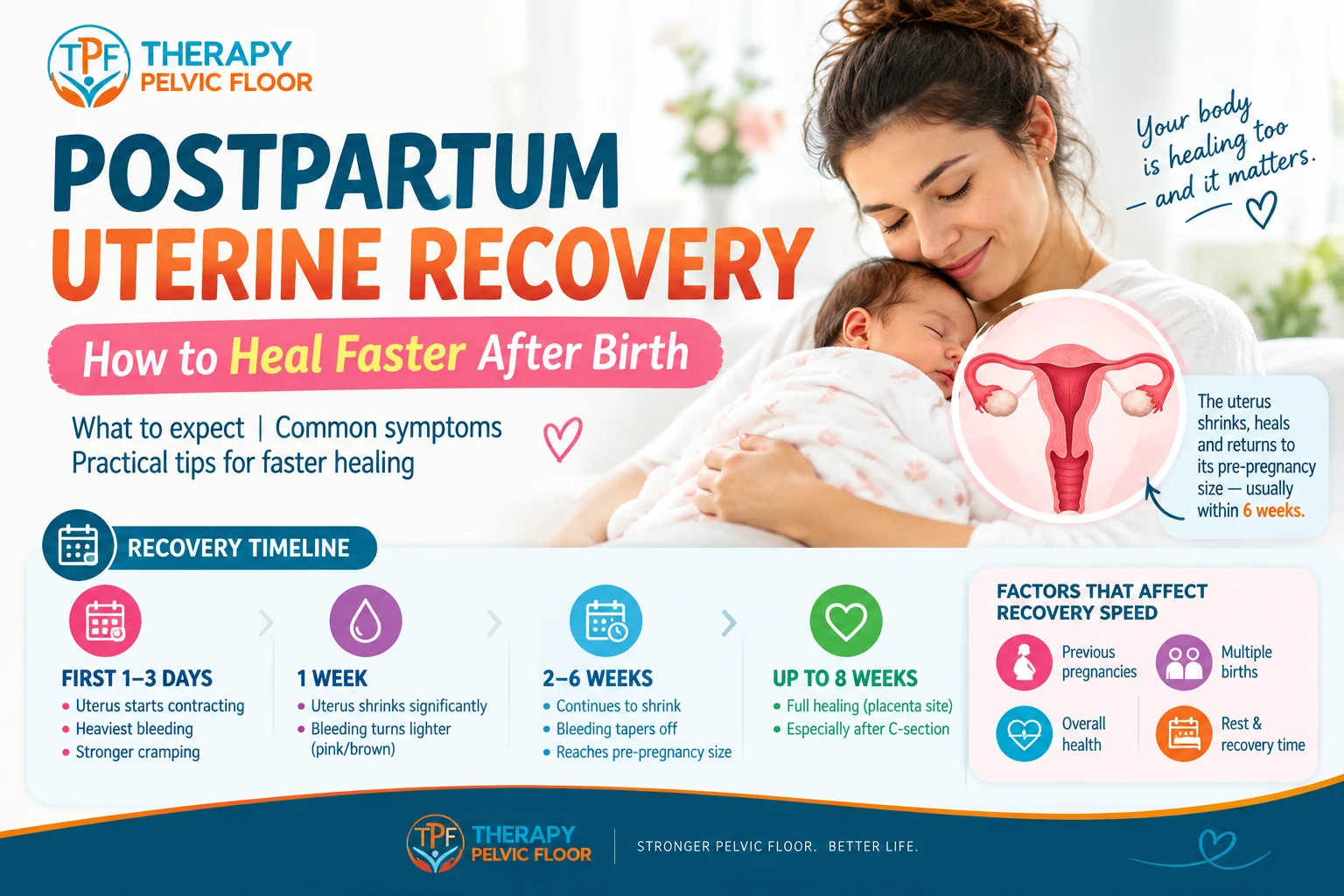
Right after delivery, most of the attention goes to the baby, understandably so. But your body just went through something enormous too, and one part of that recovery rarely gets talked about outside of a quick mention at your six-week checkup. The uterus, which spent nine months growing to hold your baby, now has to shrink back down, heal, and settle into its pre-pregnancy state, a process that’s happening quietly in the background while you’re focused on everything else.
Postpartum uterine recovery, sometimes called uterine involution by doctors, is the process your body goes through as the uterus contracts back to its normal size and the postpartum bleeding gradually tapers off. It’s a completely natural process, but understanding what’s happening, what’s normal, and what genuinely helps can make those early weeks feel a lot less confusing.
This guide walks through the timeline of uterine recovery, common symptoms along the way, and practical steps that support healing, including tools some women use to ease cramping and support the process. At TherapyPelvicFloor, this is a topic that comes up constantly alongside pelvic floor questions, since the two systems heal on a fairly similar timeline and often benefit from similar care.
If you’re reading this in the middle of those early, blurry weeks, wondering whether what you’re feeling is normal, that alone is a good sign you’re paying attention to your body. That instinct is worth trusting, and this guide should help you sort out what’s expected from what’s worth a call to your doctor.
What Is Postpartum Uterine Recovery?
Right after delivery, your uterus weighs around two pounds and sits roughly at the level of your belly button. Over the following six weeks, it gradually shrinks back down to its pre-pregnancy size, roughly the size of a fist, through a process called involution. It’s a remarkable amount of change to happen in such a short window, even though it’s rarely the part of postpartum recovery anyone talks about at baby showers.
This shrinking happens through a combination of muscular contractions, hormonal changes, and the natural shedding of the uterine lining, which is what causes postpartum bleeding, known medically as lochia. The whole process is your body’s way of resetting after pregnancy, and while it’s entirely natural, it isn’t always comfortable.
It helps to think of the uterus as a muscle that just finished an extended, demanding job. Like any muscle recovering from significant work, it needs time, and it communicates that recovery through sensations- cramping and pressure, that can feel alarming if you don’t know what’s causing them.
The Postpartum Uterine Recovery Timeline
The first few days after delivery bring the most noticeable changes, as the uterus begins contracting immediately and postpartum bleeding tends to be heaviest during this window. Many women also notice stronger, sometimes surprising cramping during this stage, particularly while breastfeeding, since nursing triggers oxytocin release, which encourages the uterus to contract further.
By the end of the first week, the uterus has typically shrunk considerably, and bleeding usually starts transitioning from bright red to a lighter pink or brown color as healing progresses.
Over the following two to six weeks, the uterus continues shrinking gradually, generally reaching its pre-pregnancy size by around the six week mark, which lines up with the standard postpartum checkup timeline most providers follow.
Full recovery, including the complete healing of the site where the placenta was attached, can take closer to eight weeks in some cases, particularly for women who had a more complicated delivery or are recovering from a cesarean section.
Cesarean recovery follows a somewhat parallel timeline internally, since the uterus still needs to contract and shrink regardless of delivery method, but the added healing of the surgical incision itself typically means the overall recovery window extends a bit longer than what’s typical after vaginal delivery.
It’s worth remembering that these timeframes are general patterns rather than strict rules. Two women delivering under very similar circumstances can still experience noticeably different recovery speeds, influenced by factors like overall health, whether it’s a first pregnancy or a later one, and even how much rest is realistically possible in those early weeks.
Factors That Affect Recovery Speed
A few things tend to influence how quickly uterine recovery progresses, and knowing them can help set realistic expectations rather than comparing your experience to someone else’s.
Number of previous pregnancies matters more than people expect. First time mothers sometimes experience a slower, gentler contraction pattern, while women who’ve delivered before often notice stronger afterpains, since the uterus tends to contract more efficiently and forcefully with subsequent pregnancies.
Multiple births, such as twins, generally mean a larger uterus to begin with, which can extend the overall shrinking timeline slightly compared to a single-birth pregnancy.
Delivery complications, including a longer labor or the need for additional interventions, can sometimes affect how smoothly the uterus contracts afterward, occasionally requiring closer monitoring or additional support from your care team.
Overall health and nutrition status heading into delivery also play a role, since a body that’s better resourced generally has more capacity to heal efficiently across every postpartum system, not just the uterus specifically.
Common Symptoms During Uterine Recovery
Cramping, often described as feeling similar to menstrual cramps, is one of the most common symptoms, particularly in the first week and especially during breastfeeding sessions, when contractions tend to intensify briefly.
Postpartum bleeding follows a fairly predictable pattern, starting heavy and bright red, gradually lightening in color and flow over several weeks. Any sudden increase in bleeding after it’s already tapered off is worth mentioning to your provider rather than assuming it’s simply part of the process.
A feeling of heaviness or pressure low in the abdomen can persist for the first couple of weeks as the uterus continues its work, gradually easing as the shrinking process progresses.
Lower back discomfort sometimes accompanies this recovery too, since the muscles and ligaments throughout the pelvic and lower back region are all adjusting together during this same window.
Mild fatigue and a general sense of tenderness low in the abdomen, separate from any surgical incision if you had a cesarean, can also linger for a couple of weeks as the internal healing continues. This tends to improve steadily rather than all at once, which is worth keeping in mind if progress feels slower than you’d expected.
What Helps Support Postpartum Uterine Recovery?
Rest and Movement Balance
Rest genuinely matters here, more than a lot of new moms give themselves permission for. At the same time, gentle movement, like short walks once you’re cleared to do so, supports circulation and can actually ease some of the heaviness and stiffness that comes with prolonged bed rest.
Finding that balance is genuinely tricky in the newborn phase, when rest often feels impossible to come by anyway. Even brief periods of lying down with your feet slightly elevated, a few times throughout the day, can make a meaningful difference without requiring the kind of extended rest that isn’t realistic with a new baby.
Breastfeeding
If you’re breastfeeding, know that the cramping you feel during nursing sessions, while uncomfortable, is actually doing productive work. The oxytocin released during breastfeeding directly encourages uterine contractions, which helps speed up the shrinking process, so those cramps are a sign the process is working as intended, not that something is going wrong.
These cramps, sometimes called afterpains, tend to be most noticeable in the first several days and generally become less intense as the days go on. They’re also often more pronounced with second or later pregnancies than with a first baby, since the uterus tends to contract more forcefully with each subsequent delivery.
Warmth and Gentle Heat
A warm compress or heating pad applied gently to the lower abdomen can ease cramping discomfort considerably, similar to how heat helps with menstrual cramps. Keeping the temperature moderate and sessions brief tends to work best during the early postpartum period, and checking with your provider about timing if you’ve had a cesarean is worth doing before applying heat directly near the incision site.
Electrical Stimulation Devices
Some women use gentle electrical stimulation, applied through electrode pads placed on the lower belly, to support comfort and encourage muscle activity in the area during recovery. Larger pads, like the 6cm×9cm rectangular electrode pads, are specifically sized for comfortable lower belly placement, and are commonly used alongside a postpartum rehabilitation device as part of a broader recovery routine. It’s always worth checking with your provider before starting any device-based approach, particularly in the first couple of weeks after delivery.
The appeal for a lot of new moms is simplicity. Once cleared to use a device, sessions typically take just a few minutes and can be done while resting or even while feeding your baby, which matters a lot during a stage of life when finding dedicated time for anything can feel impossible.
Staying Hydrated and Nourished
Proper hydration and nutrition support the body’s natural healing processes across the board, including uterine recovery, and they’re easy to overlook when you’re running on limited sleep and constant newborn care. Simple, practical steps, like keeping a water bottle within reach wherever you’re feeding your baby, tend to work better than any elaborate wellness routine during this stage.
Postpartum Uterine Recovery Timeline at a Glance
| Timeframe | What’s Typically Happening |
|---|---|
| Days 1 to 3 | Heaviest bleeding, noticeable contractions, uterus still large |
| Week 1 | Bleeding lightens in color, uterus continues shrinking |
| Weeks 2 to 4 | Bleeding tapers further, cramping generally eases |
| Week 6 | Uterus typically reaches pre-pregnancy size, standard checkup |
| Weeks 6 to 8 | Full healing, including placental site, generally complete |
As with most postpartum recovery, individual timelines vary. C-sections, multiple births, and any delivery complications can extend this timeline somewhat, and that’s a normal variation rather than a sign something is wrong.
Uterine Recovery and Pelvic Floor Health Are Connected
It’s worth mentioning how closely tied uterine recovery is to overall pelvic floor healing, even though they’re often discussed as separate topics. Both systems are recovering from the same nine months of pregnancy and the same delivery, and both benefit from similar supportive care during the postpartum window.
Many women find that addressing pelvic floor recovery alongside uterine healing produces a more complete sense of recovery overall, rather than focusing on one system in isolation. Our guide on postpartum pelvic floor recovery covers the pelvic floor side of this same recovery window in much more depth, including when it’s safe to start specific exercises.
There’s also a practical reason to think about both together. Symptoms sometimes overlap in ways that are easy to misattribute; a feeling of heaviness might stem from the uterus still shrinking, from pelvic floor weakness, or from both at once, and understanding the fuller picture tends to make it easier to know what you’re actually dealing with.
When Should You Call Your Doctor?
Bleeding that suddenly becomes heavier after it’s already started tapering off, particularly if you’re soaking through a pad in an hour or less, needs prompt medical attention rather than waiting to see if it resolves.
A fever, foul-smelling discharge, or increasing pain rather than gradual improvement can indicate infection and should be evaluated right away rather than attributed to normal recovery.
Severe or worsening cramping that doesn’t align with the typical pattern of gradual improvement over the first couple of weeks is also worth mentioning to your provider, since it could indicate the uterus isn’t contracting as expected.
According to the American College of Obstetricians and Gynecologists (ACOG), postpartum recovery involves multiple overlapping systems healing simultaneously, and providers generally encourage new mothers to reach out with any concerning symptoms rather than waiting for their scheduled six-week visit if something feels off.
There’s a tendency among new moms to downplay symptoms, worried about seeming overly cautious or bothering their provider unnecessarily. Most postpartum providers would genuinely rather hear from you and rule something out than have you wait through a concerning symptom on your own, so trust that instinct if something doesn’t feel right.
Frequently Asked Questions
How long does it take for the uterus to shrink back after birth?
Most women see their uterus return to its approximate pre-pregnancy size by around six weeks postpartum, though the full process, including complete healing of the placental site, can take closer to eight weeks.
Why do I cramp more while breastfeeding postpartum?
Breastfeeding releases oxytocin, a hormone that triggers uterine contractions, which is actually a helpful part of the recovery process even though the cramping itself can feel uncomfortable in the moment.
Is heavy bleeding normal after birth?
Yes, heavy bleeding is normal in the first few days and should gradually lighten in both flow and color over the following weeks. A sudden return to heavy bleeding after it’s already tapered off is not normal and should be reported to your doctor.
Can electrode pads help with postpartum uterine recovery?
Many women use gentle electrical stimulation on the lower belly to support comfort and muscle activity during recovery, though it’s best to confirm timing and appropriateness with your healthcare provider first.
When should I be concerned about postpartum cramping or bleeding?
Sudden heavy bleeding, fever, foul smelling discharge, or pain that’s worsening rather than improving are all signs to contact your doctor promptly rather than waiting for your next scheduled appointment.
Final Thoughts
Postpartum uterine recovery is one of those quietly significant processes happening in the background of early parenthood, easy to overlook but genuinely worth understanding. Knowing what’s normal, from the pattern of bleeding to the cramping that comes with breastfeeding, can turn a confusing, sometimes worrying few weeks into something far more manageable.
Give yourself the same grace you’d naturally extend to anyone recovering from something significant, because that’s exactly what’s happening, even if the world around you is focused entirely on the new baby. Your recovery matters too, and taking it seriously isn’t indulgent; it’s part of what sets you up to actually enjoy this new chapter rather than pushing through it exhausted and unsupported.
Rest, gentle movement, warmth, proper hydration, and for some women, supportive tools like electrode pads sized for comfortable lower belly use, all play a role in easing this process along. At TherapyPelvicFloor, we offer postpartum recovery accessories designed to support exactly this stage, and our team is always happy to help if you reach out with questions about what fits your specific recovery. And if anything feels off along the way, don’t hesitate to reach out to your provider rather than waiting it out.
